

Vokey wedges have become such a strong name in golf that many golfers buy them almost automatically, but that familiarity can hide the real buying challenge. A wedge is not a single-category product. Loft, bounce, grind and turf interaction all influence whether it actually fits your game. If you understand those basics, buying becomes far less confusing.
For UK golfers, the topic is especially relevant because course conditions vary so much through the year. Soft winter turf, firmer summer lies, links-style sand and parkland conditions can all change what feels comfortable. That is why wedge buying should be linked not only to your yardages but also to how and where you play. It also connects naturally to broader practice and fitting resources at Outtabounds such as Golf Fitting Nottingham and Indoor Golf Simulators.
Explore our complete Titleist guide covering drivers, irons, golf balls and equipment insights for golfers.
See Titleist guides
Titleist Vokey wedge guide with loft bounce and grind basics. Image credit: Titleist
Why Vokey wedges get so much attention
Vokey wedges matter because they focus on the scoring part of the bag. The goal is not only to give you another loft number. It is to help you manage trajectory, contact and versatility around the greens and from scoring distances. That is why the Vokey conversation always returns to gapping and grind fit. Golfers do not all deliver the club the same way, and they do not all use wedges for the same shots.
In practical terms, a Vokey wedge setup should make your scoring clubs feel more coherent. Full shots should gap sensibly. Partial shots should become easier to repeat. Chips and pitches should make more sense from the lies you actually face. If a wedge purchase is not improving those things, something in the setup probably needs another look.
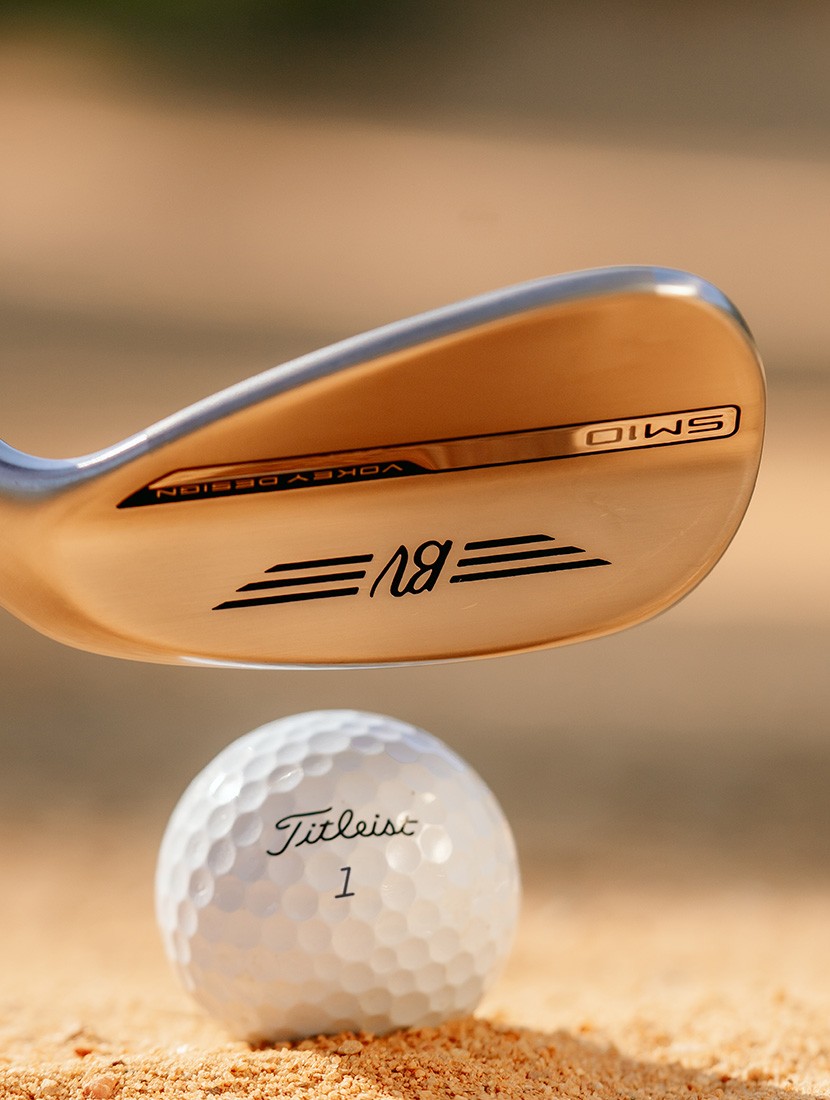
Titleist Vokey wedge and ball close-up. Image credit: Titleist
Loft gapping: the first thing to get right
Loft gapping is the cleanest place to start because it affects both full-shot distance control and how the set fits below your pitching wedge. There is no universal answer, but there should be a clear structure. Most golfers want even enough yardage spacing that each wedge has a real job. The mistake is to buy lofts by habit or because they look neat on paper without checking what your iron set lofts already do.
A stronger-lofted iron set may force you to rethink the whole wedge setup. That is one reason wedge buying often sits best within a full bag or iron fitting conversation rather than in isolation. The moment you treat the bag as a system, the gaps become easier to solve.
| Buying element | What it affects | Common mistake |
|---|---|---|
| Loft | Full-shot distance gaps | Buying standard loft gaps without checking the pitching wedge loft first |
| Bounce | How the club interacts with turf and sand | Assuming more or less bounce is always better |
| Grind | Shot versatility and sole behaviour | Choosing a grind without thinking about delivery or course conditions |
| Shaft and length | Feel and consistency | Ignoring that wedges should still fit the rest of the set |
Bounce simplified
Bounce is often explained in a way that makes golfers nervous, but the practical question is simple. How much help do you want from the sole as it moves through turf or sand? More bounce can be supportive for steeper deliveries and softer conditions. Less bounce can feel cleaner for shallower deliveries and firmer lies. That is an oversimplification, but it is a useful one when you are just trying to narrow the category.
UK golfers should take seasonality seriously here. The bounce that feels perfect on firm summer turf may not feel the same through wetter months. That does not mean you need multiple wedge sets, but it does mean you should think beyond one ideal lie.
Grind basics without the jargon overload
The reason Vokey grinds matter is that sole shaping changes how the club sits and moves on different shots. Some golfers want a wedge to feel stable and straightforward, almost like a reliable scoring tool for conventional shots. Others want more versatility when they open the face, change trajectory or play from awkward lies. Grind choice is the bridge between those needs.
If you rarely manipulate the face and mostly want dependable full shots, your ideal grind logic may be different from a player who likes to create lots of greenside shot variety. That is why copying a tour player or a fitter's personal setup is rarely the answer. Your technique and your shot menu matter more.

Titleist wedge fitting and short game testing area. Image credit: Titleist
How to test wedges properly
A wedge test should include more than a few full swings. Look at half and three-quarter shots. Hit from a basic bunker if you can. Try standard chips and pitches with the face square. If you use indoor testing, focus on strike, launch and distance gaps, but remember that turf interaction is still part of the story. That is one reason resources such as Hitting & Putting Mats and Impact Screens can help you plan a more realistic testing environment when practising at home.
Wedges are scoring tools, so the best setup is usually the one that removes indecision. When loft gaps are sensible and the sole behaviour feels predictable, your short game choices get clearer.
Explore the Full Titleist Series
- Titleist UK: Complete Guide to Golf Balls, Clubs and Fitting
- Best Titleist Golf Balls for Different Golfers in the UK
- Titleist Pro V1 vs Pro V1x vs AVX: Which Ball Should You Buy?
- Titleist GT Drivers Explained: GT1, GT2 and GT3 Compared
- Titleist T-Series Irons Explained: T100, T150, T250 and T350
- Titleist Vokey Wedges Explained: Loft, Bounce and Grind Basics
- Are Scotty Cameron Putters Worth It for UK Golfers?
- Is a Titleist Fitting Worth It in the UK?
- How to Build a Titleist Set: Balls, Clubs and Gapping from Tee to Green
Conclusion
Titleist Vokey wedges make the most sense when loft, bounce and grind are treated as parts of one scoring system. Get the gapping right, match bounce and grind to your delivery and conditions, and the wedges can become one of the most confidence-building areas of the bag.
[TOP_CTA_Bottom]


