

A Titleist fitting is worth it when it answers a real equipment question and turns broad brand interest into a clearer buying decision. That sounds obvious, but a lot of golfers still approach fitting the wrong way. They see it either as a luxury for elite players or as a sales process dressed up as data. In reality, a good fitting should reduce guesswork. That is the real value.
In the UK, Titleist fitting is especially relevant because the brand offers multiple routes, including national and regional centres and local fitting events. That breadth makes it easier to access the process, but it also means golfers should understand what they are trying to get from the session before they book. If you already practise indoors or want to connect fitting with home data, the wider Outtabounds resources on Launch Monitors and Indoor Golf Simulators are also useful alongside this guide.
Explore our complete Titleist guide covering drivers, irons, golf balls and equipment insights for golfers.
See Titleist guides
Titleist fitting guide for UK golfers. Image credit: Titleist
What happens at a Titleist fitting
A proper fitting should begin with your current performance, not with a product pitch. The fitter needs to understand what you play now, what ball you use, what ball flight you dislike and what you are hoping to improve. From there, the process should move into baseline shots and then into structured testing of different heads, shafts, lofts or settings depending on the category.
The important point is that the fitter is not simply looking for a single longest shot. They are looking for repeatability, trajectory quality, strike pattern and sensible gapping. In the best fittings, your feedback still matters, but it is anchored to measured results rather than to one impression.
| Part of the session | Why it matters | What good looks like |
|---|---|---|
| Baseline testing | Shows where you are starting from | Clear data on current launch, spin, carry and dispersion |
| Head and shaft changes | Tests what actually improves performance | Differences are explained, not guessed |
| Ball and category discussion | Connects the fitting to the whole bag | Recommendations make sense beyond one isolated club |
| Final recommendation | Turns data into a buying decision | You leave understanding why the chosen setup won |

Titleist performance centre and fitting facility. Image credit: Titleist
Who benefits most
The short answer is almost any golfer who cares enough to want better outcomes. You do not need a low handicap to benefit from a fitting. In many cases, the opposite is true. Golfers who struggle with launch, consistency or strike often gain the most because the wrong specification can make the game much harder than it needs to be.
That said, the value depends on the goal. If you are buying clubs completely blind and need a sensible route into the right category, fitting is highly valuable. If you already know the exact head and shaft that suit you and you are simply replacing worn clubs with the same build, the value may be lower. The fitting is most useful when uncertainty is still present.
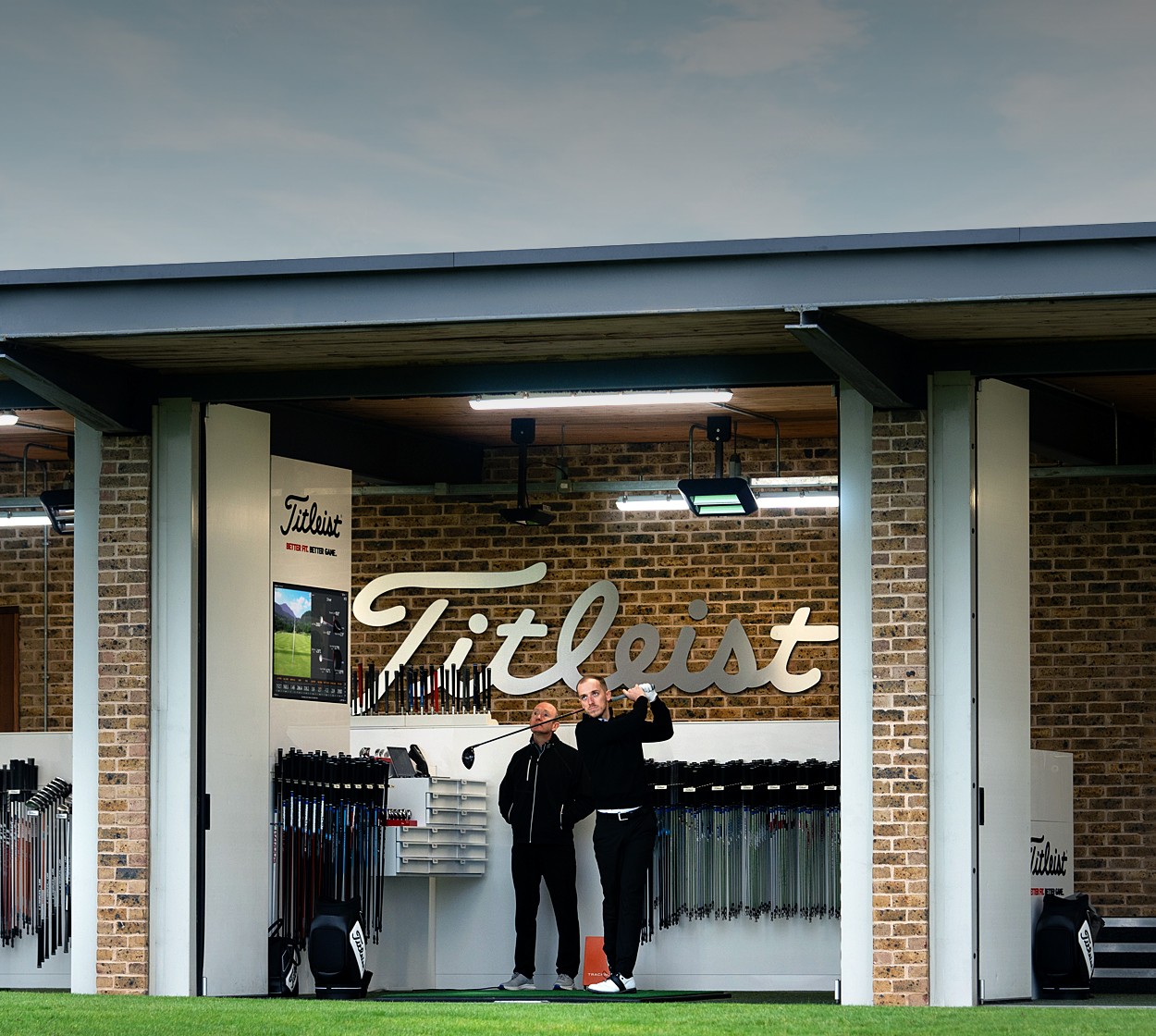
Titleist national fitting centre bay. Image credit: Titleist
How to prepare so the fitting is worth it
Preparation matters more than most golfers realise. Bring your current clubs. Use the golf ball you normally play if possible, or at least understand what ball you are comparing against. Arrive with a clear objective. Are you trying to improve launch, tighten dispersion, fix yardage gaps or decide between product categories? A fitter can help far more effectively when the question is defined.
It also helps to arrive with reasonable expectations. A fitting may confirm that your current clubs are not the main issue. It may show that a subtle shaft or lie change matters more than a model switch. That is still a successful fitting. The outcome is not supposed to be dramatic at all costs. It is supposed to be correct.
Indoor versus outdoor fitting
There is no single answer here. Outdoor fitting has the obvious advantage of visible ball flight and turf interaction. Indoor fitting can still be excellent if the technology is strong and the process is structured properly. For many UK golfers, especially during wetter months, indoor testing is the practical reality. The question is not whether indoor fitting is perfect. The question is whether it is reliable enough to support the decision you are trying to make.
That is why the surrounding environment matters. If you want to understand this part more deeply, the Outtabounds guides on Impact Screens, Golf Projectors & Mounts and Hitting & Putting Mats help explain how a quality indoor setup is built and why the environment changes what you can trust.

Titleist regional fitting session. Image credit: Titleist
When a Titleist fitting may not be necessary
If you are not ready to buy, not ready to test properly or still changing your swing heavily from week to week, it may be better to delay the full fitting and focus on practice first. Likewise, if your question is extremely narrow, such as replacing one wedge with the same loft and shaft, a full brand fitting may be more than you need.
But in most cases where golfers are considering new Titleist drivers, irons or a larger bag refresh, a fitting is one of the most sensible steps in the process. It turns preference into evidence.
Explore the Full Titleist Series
- Titleist UK: Complete Guide to Golf Balls, Clubs and Fitting
- Best Titleist Golf Balls for Different Golfers in the UK
- Titleist Pro V1 vs Pro V1x vs AVX: Which Ball Should You Buy?
- Titleist GT Drivers Explained: GT1, GT2 and GT3 Compared
- Titleist T-Series Irons Explained: T100, T150, T250 and T350
- Titleist Vokey Wedges Explained: Loft, Bounce and Grind Basics
- Are Scotty Cameron Putters Worth It for UK Golfers?
- Is a Titleist Fitting Worth It in the UK?
- How to Build a Titleist Set: Balls, Clubs and Gapping from Tee to Green
Conclusion
A Titleist fitting is worth it in the UK when it helps you move from vague product interest to a specification that clearly suits your game. It is not only for elite players, and it is not valuable only when the change is dramatic. Its value is in reducing guesswork and making the final decision more trustworthy.
[TOP_CTA_Bottom]


