

Custom ordering only improves a set if the custom decisions are good ones. That sounds obvious, but plenty of golfers use custom options to lock in guesses rather than solutions. Caley's custom pathway is useful because it gives golfers a way to tune a build online, but it still depends on the quality of the information you bring into the order.
For UK golfers, the challenge is not just choosing a head. It is knowing when length, lie angle, shaft choice or grip changes are genuinely worth making. This guide looks at how to think about Caley custom builds in a practical way so the order reflects your game rather than your assumptions.
Explore indoor golf, launch monitor feedback and equipment advice from Outtabounds so you can compare clubs and make a smarter buying decision.
Explore Indoor Golf
Caley Golf custom fitting guide hero image. Image credit: Caley Golf
What custom ordering can actually improve
A custom build can improve three broad things: strike pattern, flight window and comfort. If the club is the wrong length or lie angle, the face can arrive differently through impact even when the swing feels fine. If the shaft weight or profile fights your tempo, the ball flight and strike quality can become less predictable. If the grip size feels wrong, you may struggle to release or control the club naturally.
Those are meaningful improvements when they are based on real evidence. They are far less helpful when they are driven by internet folklore, like ordering a stiffer shaft because it sounds more serious or changing lie angle because one miss felt dramatic on the range.
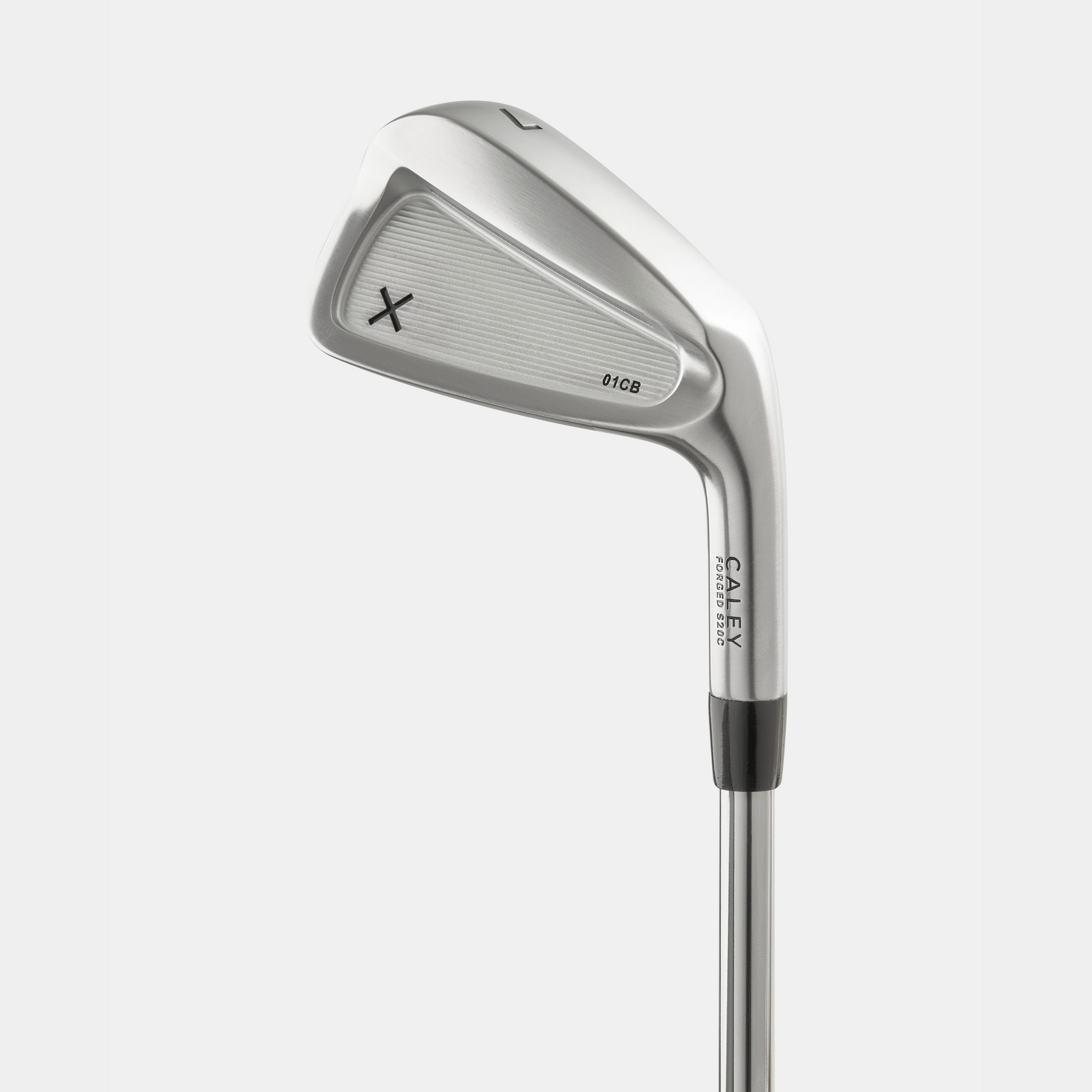
Caley custom iron option image. Image credit: Caley Golf
When Caley's online custom route makes sense
The online custom route makes the most sense when you already have reliable reference points. Maybe you know a certain shaft weight keeps your tempo better. Maybe your last fitting confirmed that you need a slightly upright lie angle. Maybe you have already learned that standard grips feel too small. In those cases, custom ordering is a logical extension of knowledge you already own.
It also suits golfers who have moved beyond broad category questions. If you already know that the 01T is your type of iron, custom ordering becomes a way to refine the build. If you are still deciding between the 01 and 01CB, the fitting logic needs to happen before the build logic.
The biggest custom mistakes golfers make
The most common mistake is confusing preference with proof. A golfer says they 'like heavy shafts' but has never compared strike quality with different weights. Another golfer orders a flatter or more upright lie based on a guess rather than impact evidence. Others stack too many changes at once and then have no idea which variable actually improved or worsened the result.
Another mistake is underestimating how clubs work together. A custom 7-iron might feel great, but a whole set needs coherent progression. The build should preserve yardage gaps, maintain feel through the set and keep the long irons or wedges from drifting into awkward territory.
If you are unsure where to start, a session tied to golf fitting gives you a much better foundation than trial-and-error ordering.
Lie angle, loft and length: why they matter more than golfers think
Lie angle has a powerful influence on start direction, particularly with irons and wedges. If the club is too upright or too flat for your delivery, the face can point left or right through impact even when the strike feels reasonable. That is why lie angle issues often masquerade as swing faults.
Length changes the player's posture, arc and strike location. More length is not free distance if it pushes strike pattern across the face. Less length is not more control if it leaves you cramped and unable to sequence properly.
Loft changes can also influence gapping and flight shape. Custom building is not only about your favourite club. It is about the whole set behaving logically from top to bottom.
Outtabounds covers these themes in more depth through golf club loft and lie adjustment. Those pages are useful because they remind golfers that fine specification changes affect ball flight in very real ways.

Caley clubs lineup image. Image credit: Caley Golf
Do you need a full fitting before ordering Caley custom clubs?
Not everyone needs a full premium fitting before placing a custom order, but almost everyone benefits from some baseline evidence. At minimum, you want to understand your current ball flight, strike pattern, normal miss and the build traits you already know work or do not work.
If you have never been fit before, that does not block the purchase, but it should slow the process. Use a launch monitor, compare your current set honestly and keep any custom change modest unless you have a strong reason to go further.
Even golfers planning to buy a home setup later can begin this process indoors. Guides like indoor golf simulators are useful because they connect fitting decisions with ongoing practice and equipment testing.
How to build confidence in a custom order
Write down what you know and what you are merely assuming. Known: current shaft weight, whether midsize grips usually feel better, whether you consistently miss left with standard lie. Assumption: you need extra length because you are tall, or X flex because you hit one drive hard last month. That distinction keeps the order grounded.
It also helps to prioritise one or two meaningful changes instead of five speculative ones. A cleaner custom brief usually leads to a better outcome. Many golfers improve a build more by choosing the correct head and a sensible shaft weight than by chasing every available option.
What happens after the clubs arrive
A custom order is not the end of the fitting process. It is the start of the validation process. Once the clubs arrive, check carry gaps, contact pattern and directional control. If something feels slightly off, do not panic. Small follow-up refinements are part of building a set properly.
That is where services like golf club repairs or golf club regripping can play a useful support role over time. Good equipment decisions are often maintained, not just purchased.
Explore the Full Caley Golf Series
- Caley Golf UK: Complete Guide to Irons, Wedges, Putters and Buying Direct
- Caley 01 vs 01T vs 01CB Irons: Which Model Suits Your Game?
- Are Caley Golf Irons Worth It for UK Golfers?
- Caley Golf Wedges Explained: Gapping, Loft Options and Who They Suit
- Caley 01X Utility Iron Guide: Who Should Use One and When?
- Caley Golf Putters Explained: Feel, Shape and Buying Considerations
- Caley Golf Custom Fitting and Custom Orders: What UK Golfers Should Know
- How to Build a Smart Caley Golf Set: Irons, Wedges, Utility and Putter
- Caley Golf vs Takomo and Other Direct-to-Consumer Brands: How to Compare Value
Final thoughts
Caley custom ordering can be a very smart route for UK golfers, but only when the build choices are grounded in evidence. The online pathway is useful because it opens up better specification control. The responsibility is making sure those specifications are actually right for your swing.
If you know your fit variables, use the custom route confidently. If you do not, get a baseline first and keep the custom changes disciplined. That sequence usually produces a far better set.


