

Shaft fitting conversations often get reduced to swing speed, but that only tells part of the story. With KBS shafts in particular, weight and flex work together with tempo, transition and delivery. Two golfers who swing at similar speed can end up in very different parts of the range because the way they load the shaft is different.
That is why a weight and flex guide is useful only when it is treated as a starting framework rather than a hard rule. Use it to narrow the field, then confirm the decision with strike quality, launch, spin and how the club feels over repeated swings.
Talk to Outtabounds about reshafting, replacement shafts, loft and lie adjustments, practical club build advice
Golf Club Reshafting
KBS shaft weight and flex fitting guide. Image credit: KBS Golf Shafts
Why weight often matters before flex
If the shaft is too heavy, the club can start to feel demanding even if the printed flex is technically right. You may lose speed late in the round, struggle to return the club consistently from the top or start missing the centre because the handle and head no longer feel coordinated. In many fittings, players think they need softer flex when the bigger issue is actually excessive total weight.
The opposite happens too. A shaft that is too light can make the club feel unstable or difficult to sense, particularly for golfers with a stronger transition. They may swing harder to find the head or struggle to control start direction because the overall build feels too quick. KBS gives you enough spread in both steel and graphite to manage that balance more carefully than with a one-size-fits-all approach.
| What you feel | Possible weight issue | What to test |
|---|---|---|
| Clubs feel heavy late in the session | Too much total weight | A lighter KBS steel or graphite option |
| The clubhead feels vague at the top | Too little total weight | A heavier KBS model or heavier build spec |
| You can swing fast but strike drifts | Weight/flex mismatch | Compare one heavier and one firmer option side by side |
What flex really tells you
Flex labels are useful, but only to a point. In KBS, the actual behaviour of the shaft depends on the whole profile, not just the letter on the label. A stiff Tour-family shaft can feel very different from a stiff C-Taper family shaft because the stiffness distribution and tip behaviour are not identical.
A more useful way to think about flex is how much support you need during transition. Golfers with a smooth load can often stay in a profile that feels responsive without losing control. Golfers who change direction aggressively usually need the shaft to stay more organised so impact is not a race to catch up. That does not always mean the stiffest option on the wall. It means the profile that keeps delivery repeatable.
If you are unsure where to begin, use your current miss patterns as clues. High-right floats, inconsistent strike and a sensation that the club is lagging behind can point toward more support. Flat, low bullets, a harsh feel and difficulty holding greens can suggest the setup has gone too far in the other direction.
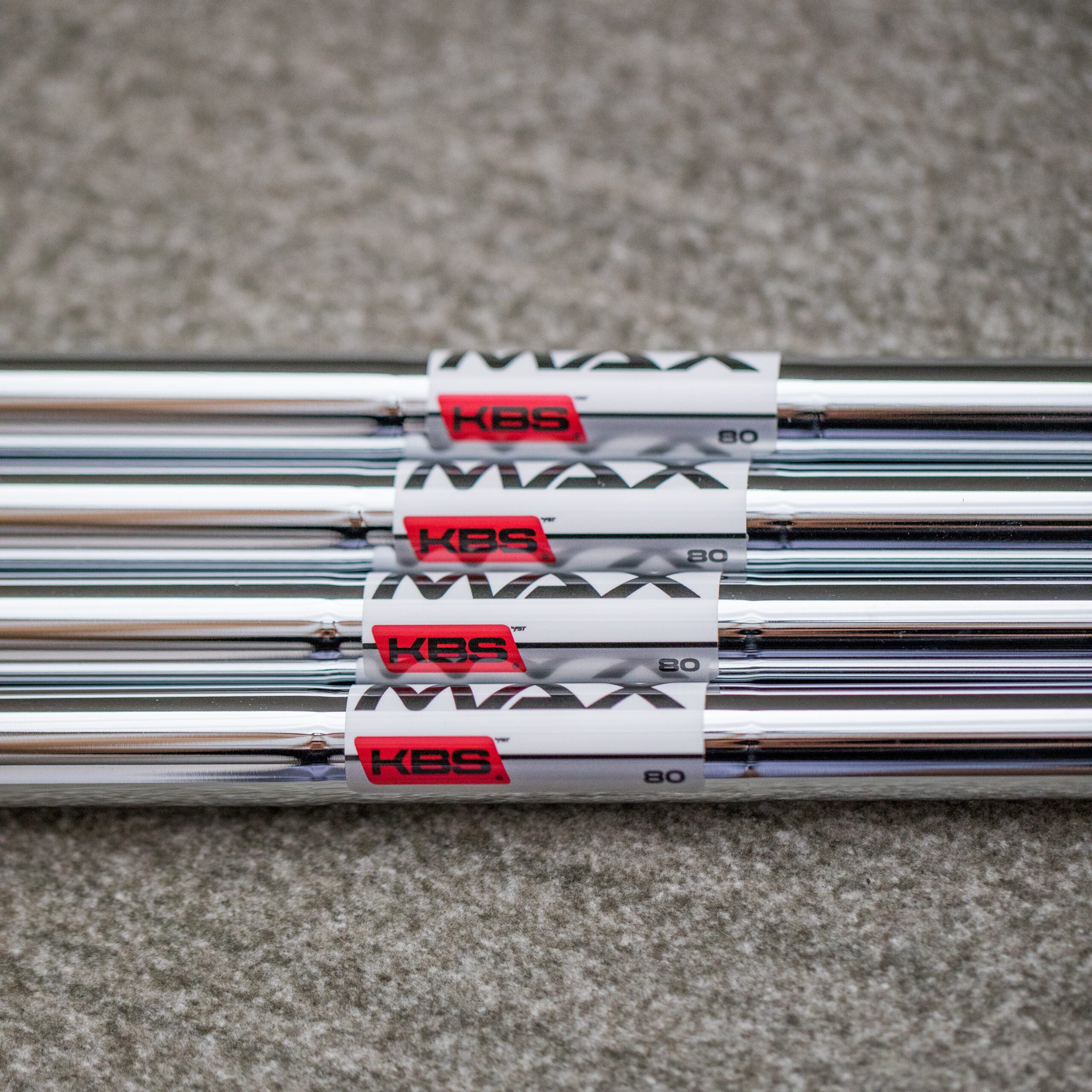
KBS shafts arranged by weight class. Image credit: KBS Golf Shafts
How tempo and transition change the answer
Tempo is often more revealing than raw clubhead speed. A golfer with moderate speed but a strong, abrupt transition can still prefer a fairly stable shaft because the handle is being moved decisively from the top. Another golfer with slightly more speed but a smoother transition may feel much better in a shaft that loads and releases more gently.
This is why the KBS range works well in fittings. You can move not only between flexes, but between profile families that change how the club feels during the swing. TOUR LITE and the MAX graphite family can help golfers who want easier speed and launch. TOUR, TGI and PGI can suit players who want a more connected, controlled response. C-Taper and related options step further into lower-flight stability.
A practical KBS starting guide
| Player tendency | Weight idea | KBS starting point |
|---|---|---|
| Smooth tempo, wants easier speed and height | Lighter | Tour Lite or MAX family |
| Neutral tempo, wants a balanced all-round build | Mid | KBS Tour or TGI/PGI depending on material |
| Stronger transition, wants flatter flight and control | Mid-heavy to heavy | C-Taper or a firmer performance profile |
| Wants lighter feel but still needs stability | Lighter with firm tip behaviour | Tour-V or $-Taper Lite depending on the goal |
Treat that table as a test order, not as a final fitting. Plenty of golfers move one step either side once they see real ball flight. The point is to avoid starting in the wrong postcode of the shaft market.
How to judge whether the fit is right
The right KBS weight and flex should make the swing feel easier to repeat. You should not need a heroic move to create your normal numbers. The strike pattern should tighten, the peak height should look believable for your speed and the distance spread should narrow rather than widen.
Pay attention to the long irons in particular. A setup that feels brilliant in a short or mid iron can become too demanding or too soft at the top end of the set. That is one reason indoor launch monitor sessions can be so useful. If you have access to a consistent practice bay, whether at a fitting studio or within a home setup, you can compare carry and peak height more cleanly. Our guides on building a golf simulator in the UK and golf simulator garden rooms show how equipment research and repeatable testing environments work together.
When you are ready to turn testing into a build, start with the basics on our golf shafts page or speak to us about reshafting. The build details around length, grip weight and swing weight are what make a good shaft choice perform properly in the finished club.
Explore the Full KBS Shafts Series
- KBS Shafts UK Guide: Models, Fitting and How to Choose
- KBS Tour vs Tour Lite vs Tour-V: Which Iron Shaft Fits Your Game?
- KBS C-Taper vs $-Taper vs $-Taper Lite: Launch, Spin and Feel Compared
- KBS Wedge Shafts Explained: Tour, 610, Hi-Rev 2.0 and Tour-V Wedge
- KBS Shaft Weight and Flex Guide: How to Match Your Swing
- KBS Graphite Iron Shafts Explained: TGI, PGI, MAX and GENERATION
- KBS Driver, Fairway and Hybrid Shafts Explained
- When to Reshaft with KBS Shafts and What the Process Looks Like
- Buying KBS Shafts in the UK: Fitting Questions, Build Options and Next Steps
KBS weight and flex selection is really about matching the club to your movement pattern, not ticking the stiff or regular box on a chart. Once the weight feels right, the rest of the fitting tends to become far clearer.
Use your tempo, transition and typical flight window as the guide. That will point you toward the part of the KBS range that deserves proper testing.


